Chemobrain’s a bitch isn’t it. Sometimes funny. Sometimes frustrating. And sometimes daunting.
Our brain is a muscle, and like all muscles, we can work it baby! And like any muscle, if you don’t use it, you lose it. Here are some brain training exercises to help get you started.
Number One: Brain Training Apps
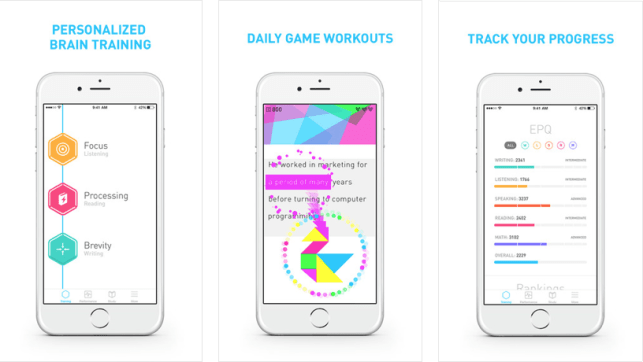
 Top of the list is my favourite new find, an app shared by Liz Fellas (ta chick!), and it’s become a daily highlight.
Elevate. A free brain training app. You take a short test when you first sign up, from which it gauges your starting ability in writing, listening, speaking, reading and maths. Then, every day you get three new games (from a selection of over 35) to play from these categories, and the app monitors your progress. The games are short and visual. You can feel the clogs in your brain turning! So much fun.
Another brain training app I’m enjoying daily, which has the same set up as Elevate, is Lumosity bought to us by a team of scientist and gamers.
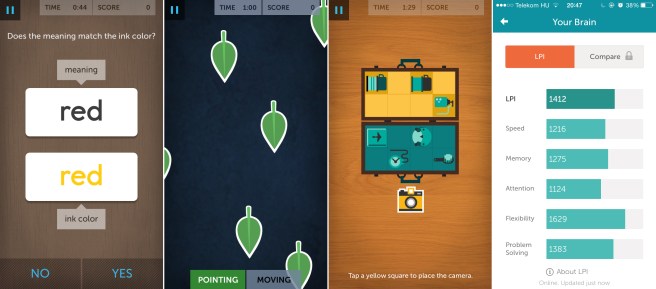
I recommend these apps to everyone, chemo brain on not.
You don’t need to pay for upgrades in either app, enjoy the benefits for free.
For brain training to do its stuff, and for us to feel the benefit in our day to day lives, we need to do at least 15 hours of exercises over the course of 8 weeks, or less.
My remaining nine tips (below) are brain stimulation exercises, to be used alongside the brain training. Brain stimulation gives our brains new experiences via our physical senses (sight, smell, touch, taste, and sound) connected to our emotional ‘sense’, to help stimulates new connections between different areas of our brain. Thus causing nerve cells to produce natural brain nutrients that help our memory, and making the surrounding cells stronger.
Play around with these tips during your recovery, building them up over time, do what you can based on your needs and capabilities. Chemo fog can take years to breakthrough, some affects are permanent – it depends on so many factors. The key to using these tips is not to overstimulate or push yourself, keep things simple, and most importantly use them to have fun!
Number Two: Use your other hand
 Try using your opposite hand for simple tasks, like brushing your teeth, washing up, using your phone, opening jars, buttering toast.
Studies show that when we use our non-dominant hand, both hemispheres in our brain are activated. Apparently this helps unlock our hidden creativity. Cool eh?!
Number Three: Mix it up!
 I can quickly become a creature of habit, so I vigorously follow this tip, making sure routine doesn’t creep up and take over.
Studies show that new and unfamiliar tasks ‘exercise large areas of the cortex, indicating increased levels of brain activity in several distinct areas. This activity declines when the task becomes routine and automatic’.
So, mix things up! Open your brain up to new stimuli. Do this by changing your travel route; walk or drive a different way to regular destinations. I also play around with different bus and tube routes.
Mix up your morning routine. If you normally shower, dress and then eat breakfast, try eating your breakfast before getting dressed. And change your normal radio station or TV news channel a couple of times a week.
Number Four: Try and have at least one human interaction every day

This can be hard I know, especially on the days when you want to hibernate and avoid the world. But lack of human interaction can have negative affects on our cognitive thinking, and adds to factors causing depression.
For the days when hanging out with friends and family is too taxing on time or emotional energy, pop out and get your groceries from a local store, where you can have small non-emotional interactions with shop owners.
If you have a bit more energy, go and enjoy reading or writing in local coffee shops. Over my recovery time spent in coffee shops, I met some kind and interesting folk sitting next to me, where conversation naturally opened up. This is a great way of getting newness into your otherwise insular cancer bubble, especially if you’re not working, and your experiences are limited to friends, family and doctors.
Number Five: Play board games with friends and family

You get two for the price of one here, as it also gives you social interaction (tip no.4)
My first summer, post treatment, was spent playing boards games; well actually, it was spent constantly losing at Monopoly. I should probably ask for a rematch now my brain cells are working properly.
Number Six: Get nosey

One of my favs! Not that I need an excuse to use candles and oils.
Without realising or giving it much thought, we have embedded smell associations throughout the routine of our day. By creating new smell associations, we alert new neural pathways in the brain.
Don’t just burn candles in the evening, try introducing new smells to the morning or afternoon.
You can also use aromatherapy oils here. Open up an aromatherapy oil bottle, and have a quick uplifting sniff before getting out of bed in the morning.
Please use natural oils and candles, which don’t use toxic synthetic scents and wax (see post Pursuit of a toxin free lifestyle)
Number Seven: Get crafty!

Something I think most of you guys are doing already without realising you’re flexing your brain.
Think back to pre-cancer, when you were working full time and never seemed to have time for hobbies, what creative stuff did you want to do? You now have the time to try it! Go, explore and play. You’ll be back in the real world again before you know it, with only weekends worth of spare time.
Colouring in is trendy right now, with a lot of variety in picture books, this is a good thing to try if you’re still spending most of your time in bed / sofa. Better yet, actually create. Try drawing or painting, knitting or stitching. I’ve noticed a few of you learning nail art during your recovery – this counts too! Whatever grabs you, just try it, who cares how good you are. No one else has to see what you produce, nor do you have to keep anything – I binned most of my stuff.
All of these activities help with your fine-motor skills, with the added benefit of helping create a relaxation state.
Being creative uses the non-verbal and emotional parts of our brains. When we create, we draw on parts of the brain interested in form, colour, and texture, as well as thought processes very different from the logical, linear thinking that occupies us most of the day.
Number Eight: Eat new foods
 You know me, eating had to be in here somewhere. If we’re looking to stimulate the emotional part of our brains, then new foods does so brilliantly, it excites us through sight, smell and taste – that’s a lot of good stimulation.
You probably won’t want to go near new smells and tastes for a while. So take this one in stages.
Once you’re ready to try new foods, start small, go with food that doesn’t need cooking or too much flavour. Like a new type of tomato, that can be enjoyed visually, sliced at room temperature, and eaten with a sprinkling of salt and olive oil. Or how about a yummy new cheese?! And when you’re ready to try stronger flavours and don’t mind temperatures, ask visitors to bring you new food to try together. Get everyone involved, have fun!
Please don’t try spending too much time in the kitchen after treatment, you’ll be a health and safety hazard (the amount of fires I caused before giving up!). There’s too much stimulation in kitchens, meaning cooking really is one of the least enjoyable experiences.
As you get stronger, you can build this up. Starting from a friend bringing you new food and recipe, cooking and eating together. To you going to a local market on your own, picking up a new ingredient, asking the stall holders / farmers how to cook with it (they know how best to use their own produce), and cooking with it yourself. Not only is this whole jouney a wonderful layered brain stimulant exercise, it’s been my favourite game to play to a) get my eating mojo back (I hated eating for about two years) and b) excite myself into healthy eating.
Number Nine: Meditate!

I never let an opportunity pass to talk about meditation. I’ve been meditating for thirteen years and swear by it. It’s one of the biggest factors to helping me get through cancer. It’s never too late to start. The benefits are endless – I will be posting these over time. For relevance to this conversation, studies have shown meditation to help with memory and depression.
If you’re already meditating, carry on the good work, make it as daily as brushing your teeth.
If you’ve never meditated before don’t be scared, it’s not hard or time consuming. You don’t even have to leave the house. Try the Headspace app to get started.
Number Ten: Get snappy!

Another of my favouite recovery games. This helps get oxygen to the brain, stimulate senses, get creative juices flowing and lastly uses fine-motor skills.
Go for a little walk with your phone – get moving and oxygen pumping to the brain.
Along the way, stop and take photos of the world around you. This exercise helps you view the world differently, makes you stop and look at the beauty in your every day environment. Look at what the clouds are doing. Are there flowers blooming? The leaves on the floor making shapes and patterns. How interesting is your neighbour’s gate, showing layers of colour, where the paint is stripping away and the rust is showing. There’s beauty everywhere, stop and see it. Be warned, this exercise is known to increase happiness levels.
And on the days, where you can’t venture further then the sofa. Take out your laptop, download the photos and hone your fine-motor skills by editing the photos. Scale them, zoom in, cut them up, shade ’em, add filters. Go nuts!
I love to see how you’re all getting on. Take photos of yourself putting these exercises into practice and share with me over on Instagram (thecancerstyleguide).
When you’re ready to start moving, at least 10 minutes exercise a day helps travel oxygen to the brain. A great little read about the benefits of exercise on the brain from my fav relation/meditation source, Headspace (it’s not a heavy a read, I promise) https://www.headspace.com/blog/2015/11/04/how-does-exercising-your-body-give-your-brain-a-workout/
Lastly, processed foods, sugar, caffeine, stodgy carbs, not only feed cancer related fatigue, it feeds chemobrain too. Natural foods, fresh fruit, veg, oily fish and water all help. Something to bear in mind when you’re able to start making healthier eating choices.
Happy health,
Lulu x
 The Cancer Style Guide