This morning was particularly hard work, after a rough day yesterday. You know the ones where you wake up feeling like you’ve been hit by a bus, when your brain wants to get up and get on with the day, but your body doesn’t play along – it’s in pain and it won’t move.
I hate these mornings, but thankfully not as much as I used to, because a) they’re happening less b) I now understand why it happens and that it’s just a temporary glitch. Plus, the insight and understanding of my body means I know how to articulate what’s going on to the world around me, without frustration. And know when to push through the pain and when not too.
Some mornings do require a push, mainly because I have a job to go to and a life I’m enjoying again. I’m careful not to book morning events or appointments at the weekend, as it’s too much pressure.
For the mornings where a little extra work is needed to get moving and out the door, here are five tips, with love from me to you.
Happy health x
1. SHOWER POWER
The last thing you want when feeling achy and in pain. Yet, the power of a shower is amazing, both mentally and physically.
Cold showers: Stimulate our immune system, increase our alertness, frees the mind, and tightens the pores on our skin.
Hot showers: Relax our muscles, lowers body tension, helps with migraines, reduces anxiety, and opens pores.
Tips: Get the benefits of both. Have a hot shower, and finish with a colder burst of water.
2. MUSIC MOTIVATION
Next time you have sofa surfing down time, and don’t know what to do with yourself – make a morning play list. Listen to it in the shower and when getting ready; it fills the room and your body with empowering energy. Choose uplifting, happy songs, which make you feel strong and motivated to get on with the day.
Note your favourite morning songs below or on Instagram, and let’s compile our very own Cancer Style Guide play list.
3. WHO’S THAT GIRL?
This is a little game I’ve been playing since my teenage years, to get through anxiety and low confidence issues. I now use it on the days I need an extra helping hand to get moving.
I have a couple of different role models, strong women I admire, who rock the show with spunk and sass. At times when my strength or confidence is flagging, for whatever reason, I call on one of these women to help me through. And I channel them, in psychological role play.
I often call upon 80’s Madonna when needing to get to social events and don’t feel I can muster the energy. What would Madonna do? Would she cancel and stay in bed. Hell no! She’d put a scarf in her hair, big ear-rings, red lipstick and shake things up. Even only for a couple of hours. So I put on some tunes, get out the lippy, don a little sparkle, and attack the situation with her cheeky fun.
4. VISUALISE THE DAY AHEAD
As tempting as it is to succumb to the pain, or comfort of staying in bed. You know mentally you’ll feel worst for it afterwards. You’ll beat yourself up for not getting to work / appointment / event.
Whilst lying in bed, try projecting your day ahead. Go into detail; what you’re wearing, eating, doing and feel the joy from being there.
For example, today, I thought about myself at my desk, dressed, and having banter with my favourite colleagues. I was enjoying a cup of hot tea in my favourite mug, and laughing at the general silliness we get up to. It felt good. I started feeling the joy of the day ahead. That joy gave me a split second burst of energy to put my feet on the ground and get into the shower. After that, everything was that little bit easier. The day didn’t disappoint, it was ten times more joyous than the projection exercise.
MINTY FRESH AND REVIVED
And some days all you can do is brush your teeth, and that’s okay. Revive your mouth, wake-up your brain cells with a menthol boost, and feel that little bit more human.
This is more than just looking after your pearly whites. This adds a small healthy habit to your day, that will psychologically help you feel better, and more in control. Looking after yourself, even with something small (that most take for granted) is a form of self-love.
Tip: Have different tooth pastes for different needs. Milder flavours / strengths for the days your mouth is in pain / tingly, and stronger flavours for when you can handle some pow wow.
I hope you’re all keeping well and enjoying this great spring sunshine. Isn’t it wonderful to finally feel the sun’s rays on our skin.
I’ve been keeping well at this end. A little tired post my recent Berlin trip, but massively impressed the travel didn’t bring on any fatigue or IBS attacks. Yay! Note to self; I should probably write a post explaining how I planned my trip to help minimise the risk.
Despite being happy and healthy, I’ve been feeling a little emotional and wobbly today, which has set off anxiety attacks.
It’s that tightening of the chest, shortness of breath, blurry vision, and breaking out in a cold sweat that comes over you in a split second, bringing with it intense feelings of fear and an urgency to escape.
I was disabled by these attacks for most of the first year post treatment, and found myself hiding in toilets a lot!
These days, I’m in a happier place, and have them few and far between. Yet when they do strike, I’m equipped with some handy yoga breathing techniques to get me back to centre quickly. I use them when I’m at my desk, on the bus, public restrooms, or on the sofa. They are a quick and effective solution to an attack, until I can look at, and deal with the bigger emotional trigger that set them off.
Here’s one of my favourite breathing exercises, which helps with headaches as well as anxiety.
Sit comfortably. Preferably sitting straight on a chair, with your left hand resting on your thigh.
Hold your right thumb over your right nostril and inhale deeply through your left nostril. At the height of your inhalation, close off your left nostril with your ring finger, then exhale through the right nostril.
Keeping the left nostril closed, inhale deeply through your right nostril. Close your right nostril again with your thumb, and release your left nostril. Exhale out of your left nostril.
You should now be in rhythm. Keeping going, slowly.
Moving on, I will be hitting the gym daily over the next week to deal with this. Some days will be for exercise to get those endorphin’s pumping. They are the best anti-depressants in the world, and you physically look better on them too – what anti-depressant pharmaceutical drug can claim that?! Alternating with yoga / meditation classes, to quieten the mind and squash the bigger emotional triggers driving the anxiety.
As for tonight, I’ll be spending it with one of my besties; with fresh air and laughter on the agenda. And may be a cheeky gin and tonic. Cheers! And happy health x
Chemobrain’s a bitch isn’t it. Sometimes funny. Sometimes frustrating. And sometimes daunting.
Our brain is a muscle, and like all muscles, we can work it baby! And like any muscle, if you don’t use it, you lose it. Here are some brain training exercises to help get you started.
Number One: Brain Training Apps
Top of the list is my favourite new find, an app shared by Liz Fellas (ta chick!), and it’s become a daily highlight.
Elevate. A free brain training app. You take a short test when you first sign up, from which it gauges your starting ability in writing, listening, speaking, reading and maths. Then, every day you get three new games (from a selection of over 35) to play from these categories, and the app monitors your progress. The games are short and visual. You can feel the clogs in your brain turning! So much fun.
Elevate App
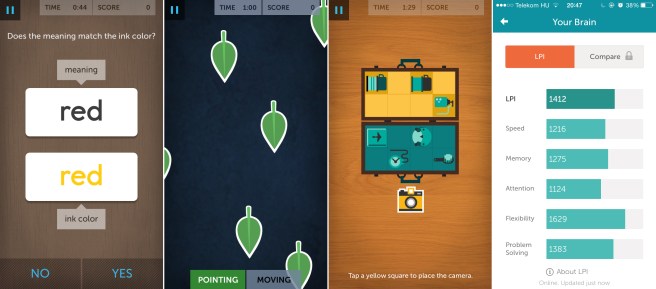
Another brain training app I’m enjoying daily, which has the same set up as Elevate, is Lumosity bought to us by a team of scientist and gamers.
Lumosity App
I recommend these apps to everyone, chemo brain on not.
You don’t need to pay for upgrades in either app, enjoy the benefits for free.
For brain training to do its stuff, and for us to feel the benefit in our day to day lives, we need to do at least 15 hours of exercises over the course of 8 weeks, or less.
My remaining nine tips (below) are brain stimulation exercises, to be used alongside the brain training. Brain stimulation gives our brains new experiences via our physical senses (sight, smell, touch, taste, and sound) connected to our emotional ‘sense’, to help stimulates new connections between different areas of our brain. Thus causing nerve cells to produce natural brain nutrients that help our memory, and making the surrounding cells stronger.
Play around with these tips during your recovery, building them up over time, do what you can based on your needs and capabilities. Chemo fog can take years to breakthrough, some affects are permanent – it depends on so many factors. The key to using these tips is not to overstimulate or push yourself, keep things simple, and most importantly use them to have fun!
Number Two: Use your other hand
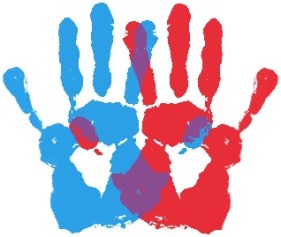
Try using your opposite hand for simple tasks, like brushing your teeth, washing up, using your phone, opening jars, buttering toast.
Studies show that when we use our non-dominant hand, both hemispheres in our brain are activated. Apparently this helps unlock our hidden creativity. Cool eh?!
Number Three: Mix it up!
I can quickly become a creature of habit, so I vigorously follow this tip, making sure routine doesn’t creep up and take over.
Studies show that new and unfamiliar tasks ‘exercise large areas of the cortex, indicating increased levels of brain activity in several distinct areas. This activity declines when the task becomes routine and automatic’.
So, mix things up! Open your brain up to new stimuli. Do this by changing your travel route; walk or drive a different way to regular destinations. I also play around with different bus and tube routes.
Mix up your morning routine. If you normally shower, dress and then eat breakfast, try eating your breakfast before getting dressed. And change your normal radio station or TV news channel a couple of times a week.
Number Four: Try and have at least one human interaction every day
This can be hard I know, especially on the days when you want to hibernate and avoid the world. But lack of human interaction can have negative affects on our cognitive thinking, and adds to factors causing depression.
For the days when hanging out with friends and family is too taxing on time or emotional energy, pop out and get your groceries from a local store, where you can have small non-emotional interactions with shop owners.
If you have a bit more energy, go and enjoy reading or writing in local coffee shops. Over my recovery time spent in coffee shops, I met some kind and interesting folk sitting next to me, where conversation naturally opened up. This is a great way of getting newness into your otherwise insular cancer bubble, especially if you’re not working, and your experiences are limited to friends, family and doctors.
Number Five: Play board games with friends and family
You get two for the price of one here, as it also gives you social interaction (tip no.4)
My first summer, post treatment, was spent playing boards games; well actually, it was spent constantly losing at Monopoly. I should probably ask for a rematch now my brain cells are working properly.
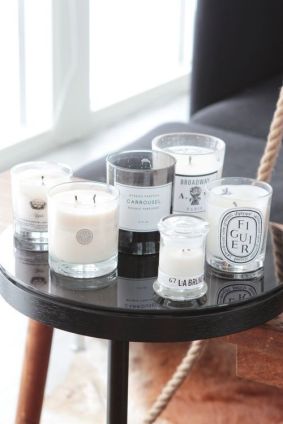
Number Six: Get nosey
One of my favs! Not that I need an excuse to use candles and oils.
Without realising or giving it much thought, we have embedded smell associations throughout the routine of our day. By creating new smell associations, we alert new neural pathways in the brain.
Don’t just burn candles in the evening, try introducing new smells to the morning or afternoon.
You can also use aromatherapy oils here. Open up an aromatherapy oil bottle, and have a quick uplifting sniff before getting out of bed in the morning.
Something I think most of you guys are doing already without realising you’re flexing your brain.
Think back to pre-cancer, when you were working full time and never seemed to have time for hobbies, what creative stuff did you want to do? You now have the time to try it! Go, explore and play. You’ll be back in the real world again before you know it, with only weekends worth of spare time.
Colouring in is trendy right now, with a lot of variety in picture books, this is a good thing to try if you’re still spending most of your time in bed / sofa. Better yet, actually create. Try drawing or painting, knitting or stitching. I’ve noticed a few of you learning nail art during your recovery – this counts too! Whatever grabs you, just try it, who cares how good you are. No one else has to see what you produce, nor do you have to keep anything – I binned most of my stuff.
All of these activities help with your fine-motor skills, with the added benefit of helping create a relaxation state.
Being creative uses the non-verbal and emotional parts of our brains. When we create, we draw on parts of the brain interested in form, colour, and texture, as well as thought processes very different from the logical, linear thinking that occupies us most of the day.
Number Eight: Eat new foods
You know me, eating had to be in here somewhere. If we’re looking to stimulate the emotional part of our brains, then new foods does so brilliantly, it excites us through sight, smell and taste – that’s a lot of good stimulation.
You probably won’t want to go near new smells and tastes for a while. So take this one in stages.
Once you’re ready to try new foods, start small, go with food that doesn’t need cooking or too much flavour. Like a new type of tomato, that can be enjoyed visually, sliced at room temperature, and eaten with a sprinkling of salt and olive oil. Or how about a yummy new cheese?! And when you’re ready to try stronger flavours and don’t mind temperatures, ask visitors to bring you new food to try together. Get everyone involved, have fun!
Please don’t try spending too much time in the kitchen after treatment, you’ll be a health and safety hazard (the amount of fires I caused before giving up!). There’s too much stimulation in kitchens, meaning cooking really is one of the least enjoyable experiences.
As you get stronger, you can build this up. Starting from a friend bringing you new food and recipe, cooking and eating together. To you going to a local market on your own, picking up a new ingredient, asking the stall holders / farmers how to cook with it (they know how best to use their own produce), and cooking with it yourself. Not only is this whole jouney a wonderful layered brain stimulant exercise, it’s been my favourite game to play to a) get my eating mojo back (I hated eating for about two years) and b) excite myself into healthy eating.
Number Nine: Meditate!
I never let an opportunity pass to talk about meditation. I’ve been meditating for thirteen years and swear by it. It’s one of the biggest factors to helping me get through cancer. It’s never too late to start. The benefits are endless – I will be posting these over time. For relevance to this conversation, studies have shown meditation to help with memory and depression.
If you’re already meditating, carry on the good work, make it as daily as brushing your teeth.
If you’ve never meditated before don’t be scared, it’s not hard or time consuming. You don’t even have to leave the house. Try the Headspace app to get started.
Number Ten: Get snappy!
A photo from one of my early recovery outings
Another of my favouite recovery games. This helps get oxygen to the brain, stimulate senses, get creative juices flowing and lastly uses fine-motor skills.
Go for a little walk with your phone – get moving and oxygen pumping to the brain.
Along the way, stop and take photos of the world around you. This exercise helps you view the world differently, makes you stop and look at the beauty in your every day environment. Look at what the clouds are doing. Are there flowers blooming? The leaves on the floor making shapes and patterns. How interesting is your neighbour’s gate, showing layers of colour, where the paint is stripping away and the rust is showing. There’s beauty everywhere, stop and see it. Be warned, this exercise is known to increase happiness levels.
And on the days, where you can’t venture further then the sofa. Take out your laptop, download the photos and hone your fine-motor skills by editing the photos. Scale them, zoom in, cut them up, shade ’em, add filters. Go nuts!
I love to see how you’re all getting on. Take photos of yourself putting these exercises into practice and share with me over on Instagram (thecancerstyleguide).
When you’re ready to start moving, at least 10 minutes exercise a day helps travel oxygen to the brain. A great little read about the benefits of exercise on the brain from my fav relation/meditation source, Headspace (it’s not a heavy a read, I promise) https://www.headspace.com/blog/2015/11/04/how-does-exercising-your-body-give-your-brain-a-workout/
Lastly, processed foods, sugar, caffeine, stodgy carbs, not only feed cancer related fatigue, it feeds chemobrain too. Natural foods, fresh fruit, veg, oily fish and water all help. Something to bear in mind when you’re able to start making healthier eating choices.
“For me, this lifestyle is all about self love. Giving my body the absolute best I can for long term health and happiness”.
I was asked recently why I decided to pursue a toxin free lifestyle. So, before I open my beauty bag and cleaning cupboard to you over a series of new posts, sharing recommended toxin-free products, I thought I’d give you an introduction as to the why, what and how.
As a cancer survivor, I’m sure this isn’t the first time you’re hearing about someone else’s decision to live toxin free. I’m also sure you were bombarded with crazy articles and conspiracy theories from friends, which scared you using anything and everything in your home. Everything from loo paper to toothpaste is going to kill you according to the internet. If you look hard enough, you will find an article from someone ‘credible’ linking everything to cancer. It’s even scarier reading this stuff when you’re in the middle of the cancer fight.
There is some truth behind some of these stories. There are chemicals out there in the everyday products found in our homes, that are classified as carcinogenic which are linked to cancer, endocrine disruption, reproductive toxicity, immunotoxicity, neurotoxicity and allergies.
The good news is, if you want to start eliminating toxins from your life, you can. It’s daunting, frustrating, and it takes a while, but we’re lucky enough to live in a day and age to have alternatives.
My journey……
One of my favourite childhood memories was watching with intrigue and amazement as my dear dad washed his hair with weird and wonderful kitchen-found products. There were lemons, olive oil, beer and eggs…not all together, obviously. And the only way I was ever allowed to use face masks as a teenager was to learn recipes to make them myself….queue, an increase of avocados on mum’s shopping list, not an easy all-year-round find back in the early 90’s.
We grew up in a family that mixed natural methods alongside regular products found in the supermarket. It’s the same story with household cleaning products, our grannies taught us the powerful benefits on lemons, vinegar and bicarb and we used them alongside Persil, Flash and Mr.Muscle.
That being said, over the years, the preference for convenience, big promises and pretty packaging won over the traditional non-chemical approach learned in my youth, and my adult cupboards became full of toxins and chemicals.
Fast-forward 20 odd years later.
Within days of being diagnosed with the Big C, I had a treatment plan. I needed an aggressive cocktail of different chemo drugs to shrink the tumour by 15-20% for surgeons to operate. We have to remember treatment is a choice, and having already seen Steve Jobs waste precious time with natural alternatives on his NET pancreatic tumour, I chose to proceed with pumping my body full of nasty toxic chemicals, knowing I had a small window of opportunity to attack the tumour. I believe in modern medicine and science as much as I believe in natural remedies – there’s a time and a place for both. I don’t believe they are mutual exclusive choices either; they can work just as successfully, if not better, hand in hand along the way, through treatment and recovery.
Having chosen the chemotherapy road, I decided to make some lifestyle changes along side it and give it all I had. One of those changes was cleaning up my act and reducing the number of toxins I was putting in my body aside from drugs. Limiting the carcinogenics going into my body, so it could work at its optimum strength to fight the cancer already there. That was my approach, and not something that was medically backed by the doctors. Considering how we were raised, turning to toxin-free products and home-made potions felt like the completely natural thing to do.
I remember my sister Georgie kicking things off, calling me in that first week to say she was coming over to pick me up – we were going ‘toxin-free shopping’ at Planet Organic. Whoop! I loved shopping back then. Whilst waiting for her to come over, I got out a black bag and binned all the washing powders, liquids, sprays and detergents from under the sink. That was fun and easy peasy. Then I got to the bathroom cupboard; that bit wasn’t so. I looked lovingly at all that pretty packaging I mentioned earlier, doing a mental tally of how much those trips to Space NK totaled, sat on the bathroom floor and wept. How was I going to replace all these gorgeous lotions and potions? I loved the idea of going clean but I’d spent a lifetime finding the right curling crème for my ringlets, the right moisturising shampoo for bleached damage hair, and the moisturisers and perfumes that made me smell of wild jasmine nights. How? How was all this stuff going to be replaced? It was bad enough having chemo, but now I was giving up all the magic products that made me look and feel like me.
I huffed and puffed (and perhaps stomped a little) for the 10-minute drive to Planet Organic. Poor Georgie. She ever so patiently tried to convince me the shelves were stacked with shiny new high performing clean products. All I could do was remember the smelly, ugly bottled beauty products that lined the shelves in the 90’s health stores.
I silently walked around Planet O (I go quiet when I’m really mad), Georgie excitedly showing me the new health store of the naughtiest, whilst I dragged my feet thinking of my empty bathroom cupboard. As we turned the corner into the beauty aisle, my heart skipped a beat. What was this? This wasn’t the health store beauty aisle I remembered. This was a beauty aisle I recognised! Brands and products I already knew and loved, not realising they were clean and green. This was high-end pretty packaging-ville. Oh hurrah! There were no compromises or second rate products here.
We forked out a fair bit to get the staples. To ease the financial and emotional pressure, we decided to start with the basics and find alternatives for all the other products over time. We started with; shampoo, conditioner, body soap, hand soap, face moisturiser, body moisturiser, deodorant and toothpaste.
With only the exception on bleach, all the other cleaning products were replaced in the house. I kept the bleach at the back of the cupboard for emergencies, but that’s since gone too.
Replacing kitchen sprays is straightforward, we’re not as attached to them as we are our shampoo. However, when it came to personal grooming products, I didn’t fall in love with everything I first tried – but hey, you gotta start somewhere. There were times I got frustrated, and stressed at not finding ‘clean’ replacements that were high performing or to my taste. With stress itself being a toxin, I decided to relax, and revert to my old products until I found a good clean alternative to take over. Once I took the pressure off to do everything in one go, it became a nice adventure amidst the hospital appointments, and over time I’ve slowly found the products that best suit my needs and home.
I’ve seen such evolvement in this area, with regular brands cutting out naughty chemicals, as well as the cleaner alternatives becoming easily available and cost comparative. You’ll be surprised how much easier it is to find cleaner and natural brands.
My cupboards are pretty much toxin free now and I love it, I wouldn’t go back to the beauty cupboard I cried over years ago. However, I’ve stayed relaxed about the whole thing, and still happily turn to high performance products every now and then, when a bit of extra help is needed. Especially in the early days of recovery, when let’s face it, we need a lot of help to get our outsides back to where we want them to be.
Examples of this; I may have a carcinogenic free toothpaste for long term use, but used a few months worth of whitening strips after being bed bound for the best part of a year, and needed to get my pearly whites back to smiling standard. And don’t get me started on deodorants, there weren’t any natural ones out that could deal with the hormone flushes, so I stayed with Mitchum until they stopped and could comfortably switch to something more natural.
Going clean all in one go is a costly and exhausting exercise, treatment and recovery is hard enough. My advice is to take it slow, enjoy the ride, and don’t put too much pressure on yourself. Let the people around you know what you’re doing, so they can help with gifts and recommendations. Talk to shop assistants and the girls at the beauty counters, they’ll give you great free advice and often samples. Watch this space and Instagram for recommendations, and soon I’ll be launching an exciting project to help bring you the best products out there straight to your homes.
Although I’m now cancer free, and treatment is well and truly finished, I continue to pursue a toxin free lifestyle. Why? Well, I want to stay healthy and keep the cancer at bay for as long as possible, and my part in that starts with how I treat my body. For me, this lifestyle is all about self love. Giving my body the absolute best I can for long-term health and happiness. And on a separate note, but a really important one to raise. Toxins and chemicals feed (CRF) fatigue, a side-effect of cancer therapy, and something I’ve been struggling with.
My body is getting stronger, my gastric system healthier and fatigue better under control. I attribute that to the lifestyle I’ve been building and a big part of that is living toxin free.
Toxins to our bodies are not only constrained to products found in bottles, the wrong food and stress can of course be just as toxic. You’ll find once you start going down this path, you’ll become keen to live cleaner in those areas too. It’s a snowball affect, it feels so good and healthy, that it’s hard not to want to continue making changes everywhere. It doesn’t have to be drastic, you don’t have to give up work, turn into a raw food eating vegan and live on a farm. Again, there are ways to start reducing toxins in all areas of your life, as you continue living exactly where you are.
Living a clean lifestyle for me has been, and still is a slow burn. Changing over 30 years worth of habits and tastes in one go would have been an impossible task. But as you start adding the good stuff, the bad stuff starts falling away from your life quite naturally.
There are loads of ‘detox your body’ / ‘detox your life’ programmes out there, apparently you can do it all in 30 days, 10 days etc.. etc. Maybe some people can, but I’ve yet to see anyone in the real world do this and keep to it successfully. As soon as you get back to your real life, or come up against real life challenges, it is scientifically proven that we revert back to old and familiar habits. The idea is to be clever and create a new normal, one habit at a time, reprogramming your neurological patterns. I refuse to believe you can change a whole lifetime of eating, shopping, living and working habits in one go or 30 days. It takes time, work and dedication. But with a relaxed attitude and an appetite for the new, it’s a fun road to take and the benefits make it worthwhile.
I encourage you all, survivor or not, to make the decision to change.
I like to think we all excite by the discovery of something new. Sometimes little discoveries can be found right on our doorstep, as was the case with a little trip to my local pharmacy.
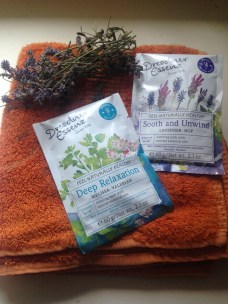
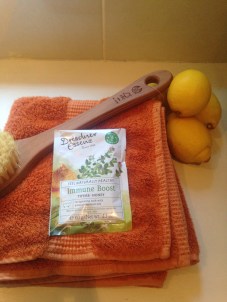
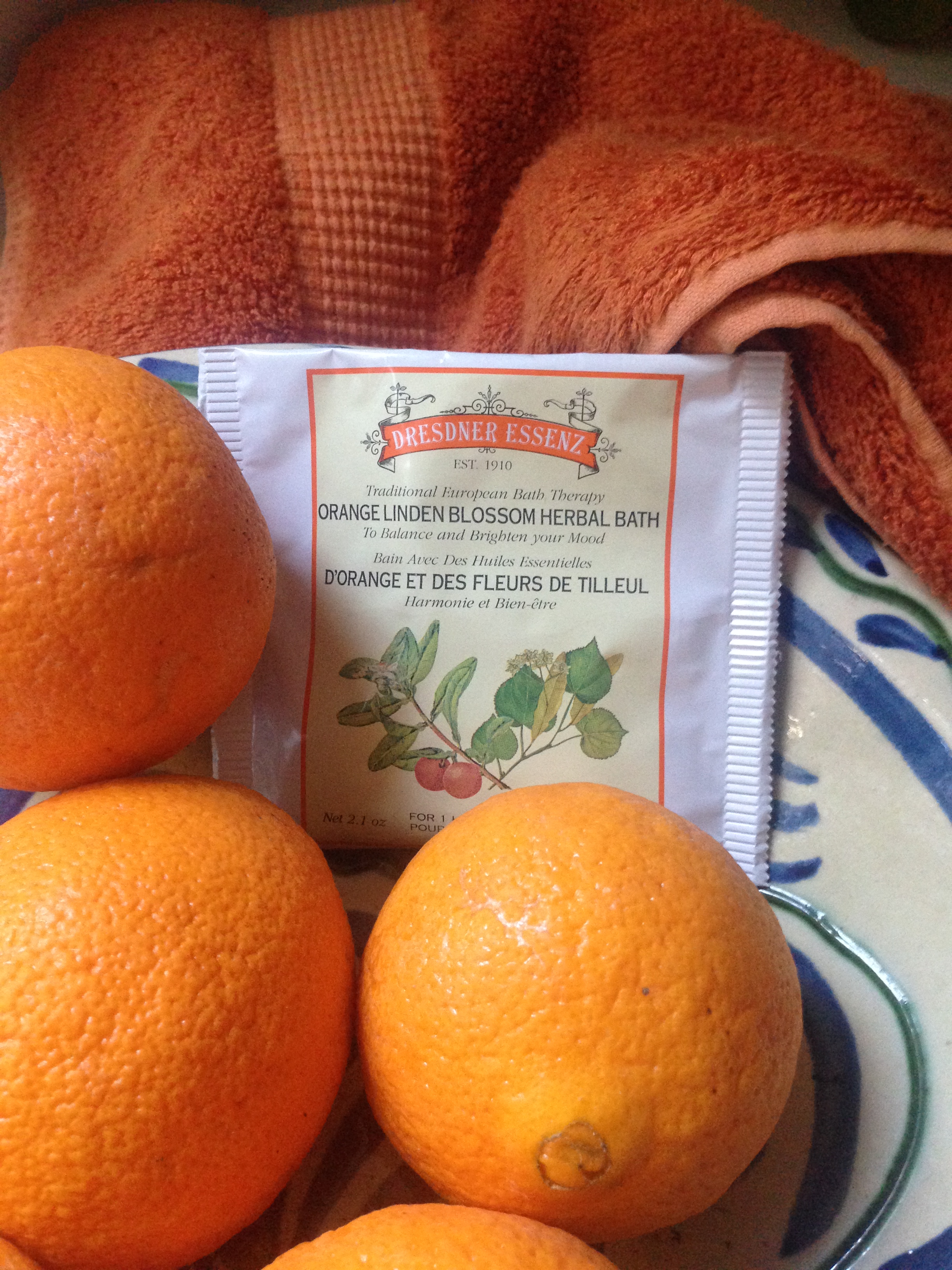
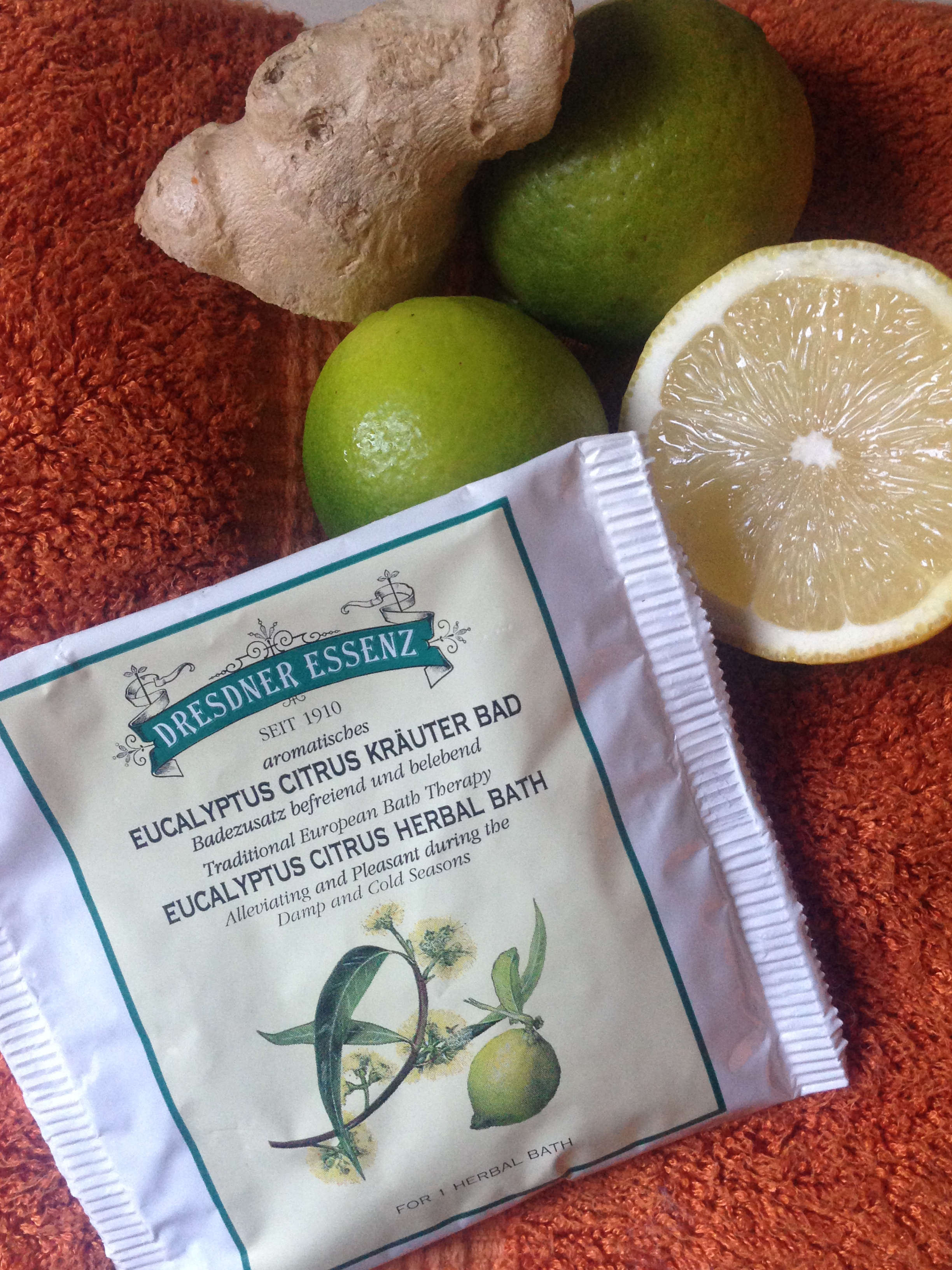
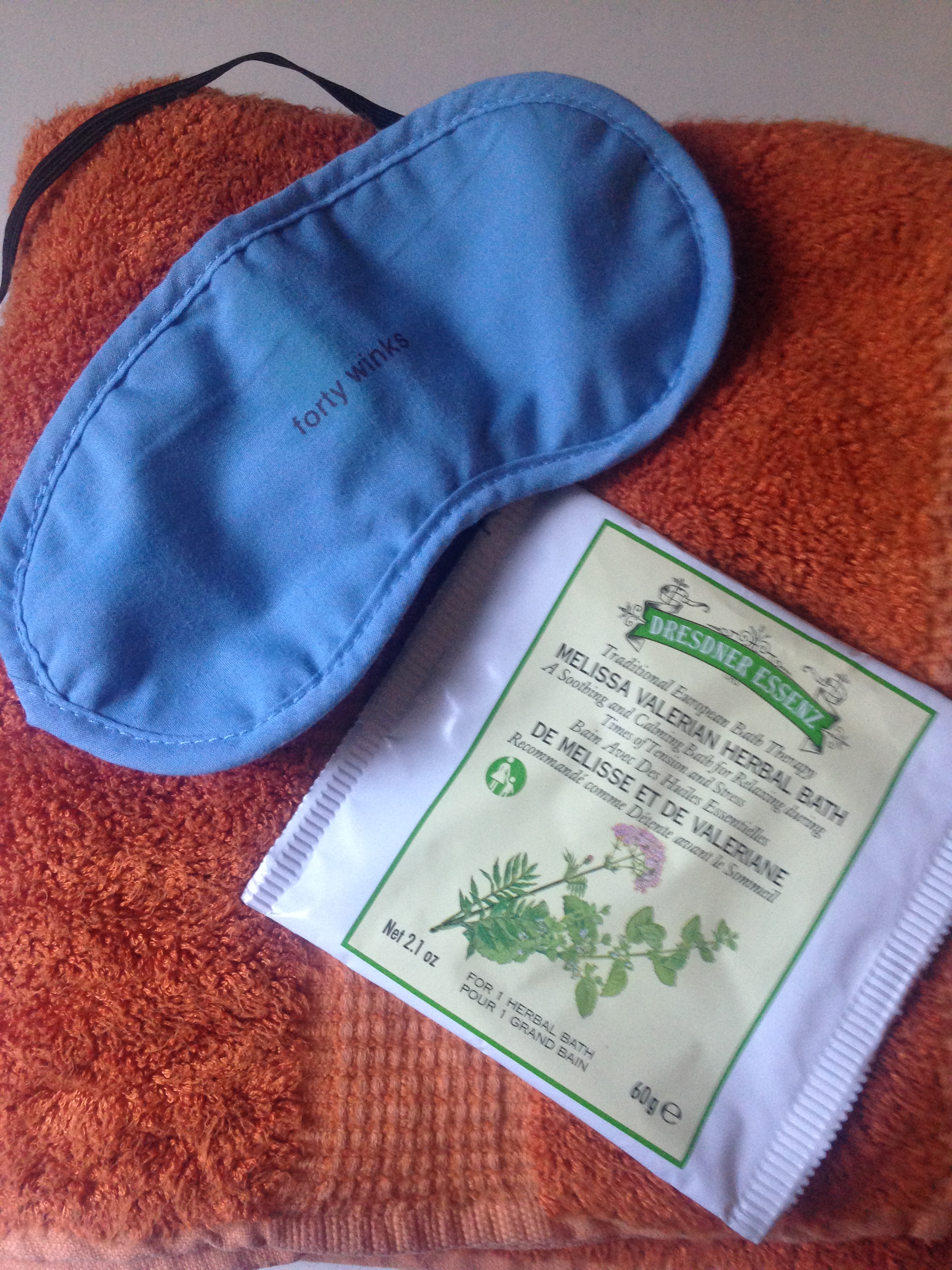
My latest find is a holistic German brand called Dresdner Essenz, and it’s affordable bath salt sachets. Made up of a base of sea salt and magnesium sulphate (remember the epsom salts from my previous post?) with added plant extracts to offer us an extra health boost. I bought a little selection for the winter months:
For soothing baths to help sleep and de-stress:
Deep relaxation: Melissa & Valerian, including Lavender
Sooth and Unwind: Lavender & Hop, including Valerian
Invigorating baths to help boost your immune system
Immune Boost: Thyme & Honey, including Eucalyptus
The pictures above show the new packaging used by this brand. At the time of shopping, I purchased a mixture of what I thought were just the old and new packaging, liking them both.
Old packaging:
However when I got home and looked at them more closely, I realised that the old packaging was also an older blend, and include PEG emulsifiers. The new packaging signifies a new recipe with natural emusifiers, replacing the silicon PEG variety.
I keep a beady eye on ingredients in health, beauty and home products. Where I can, I will choose to avoid as many artificial chemicals as possible – many are carcinogenic and on a day-to-day basis feed fatigue.
Not all my products are ‘clean’ (yet!), but I’m nearly there. It takes a while to find good clean substitutes for some of the products you have used and loved your whole adult life. There is great innovation and variety now-days, that it doesn’t feel like a compromise to go clean, you just need a little patience and sense of discovery. So the older sachets are destined for the bin, if unable to be replaced by the pharmacy.
PEG Emulsifiers
Emulsifiers are used in mixtures to bind other ingredients, and they often have their own benefits to the recipe above being the glue. PEG emulsifiers are a silicon variety found in make-up and beauty products, detergents and paper to name a few.
I woke up today with a whopper spot on my nose (I’ll spare you a photo on this occasion), which reminded me, I promised you a post on how to read facial spots, commonly known as ‘face mapping’.
Stuff going on inside us will eventually start showing on the outside. Learning to read these signs helps us identify which organs are distressed and need a bit of TLC at that moment in time.
Acne face mapping stems from Chinese medicine and developed by dermatologists over years. This is to be used as a guideline only and may not apply to everyone in every instance. If for example you get a spot by your ear lobe, it doesn’t necessarily mean there’s something wrong with your kidneys. There are other factors that could be responsible, for example, skin care products, make-up, make-up brushes, hygiene, hormones, allergies, medications and genetics.
For me, most of the past few years were a case of connect the spots, and as long as my body needed help healing inside, there wasn’t any magic cream or procedure that could fix the outside. There are however cheat products to help you ‘fake it till you make it’, which I will share with you over time.
Now that my body is absorbing nutrients again, it’s showing in my face. But as soon as I take my foot off the gas or start to feel run down, like this week, it’s right there in the mirror.
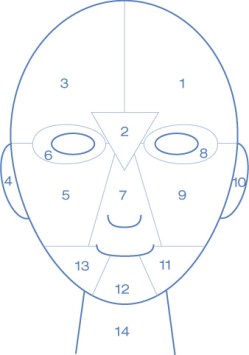
This is a face map and an outline of what it means when we experience an outbreak within each zone, especially if re-occurring. I have gone on to give top-line advice on foods and tips to help.
Zones 1 and 3 : Bladder and Digestive System
Breakouts around the forehead could indicate that your digestive system is struggling to breakdown food being consumed.
Zone 2 : Liver
This could indicate food intolerance’s or a distressed liver.
Tips for zones 1, 2, 3 and 12.
Cut out / reduce your alcohol consumption as much as possible.
Please also cut out fizzy drinks, they are pure poison and offer no benefits.
Reduce too many dairy products. Switch to skimmed / semi-skimmed milk or have some fun trying dairy free alternatives: Oat milk / Almond milk / Rice milk / Coconut milk / Soya milk.
Reduce refined sugars as much as possible.
Drink plenty of water to flush out toxins.
Replace as much of your caffeine as possible with herbal teas.
Try and cut out junk food and fast food from your diet as much as you can: fatty foods, like burgers and chips, are harder to digest. By reducing these types of foods, we’re offering our digestive system an easier time as it won’t have to work as hard.
If, like me, the spots are part of a bigger digestive problem, speak to your consultant / doctor for recommended pro-biotics. But please stay away from the pro-biotic drinks found in supermarkets offering big claims (which they don’t deliver) and way too much sugar.
Do a little bit of light exercise every day or every other day. Even if it’s a walk around the block, the fresh air is also another benefit.
Practice relaxation / meditation / breathing techniques to alleviate stress and worry.
Foods that help the digestive system: The two things that helped me the most and advised by medical professionals were natural yoghurt’s, which offer natural pro-biotics (avoid the ones loaded with sugar and flavouring, it’s better to add your own fruit and honey) and secondly fresh mint. Other foods for healthy guts are beans and pulses for much needed fibre, oily fish like salmon / mackerel and ginger,
Foods that help the liver: Let’s start with my personal favourite, beetroot, yum! And in no particular order, tomatoes, spinach, carrots, grapefruit and all other citrus, dark greens, turmeric, cruciferous veg (broccoli, cauliflower, sprouts, kale), garlic, walnuts, avocados, apples and green tea.
Zones 4 and 10: Kidneys
If you get spots around the ears, including the lobes down to the jaw line, make sure you are drinking enough water and reduce the amount of dehydrating beverages you’re consuming, such as coffee or fizzy drinks.
Tips for zone 4 and 10.
Lots and lots of water, unless you have kidney disease, in which case you may not need as much, because damaged kidneys cannot get rid of extra fluid as well as they should. Your doctor will be advising you on your water intake in this situation.
Reduce your salt intake.
Foods that help the kidneys: Lemon juice (I try and have half a lemon in hot water every day as a matter of course), apples, pumpkin seeds, all the berries, ginger, watermelon, turmeric, dandelion, nettle, marshmallow root and lastly, one of the biggest helps to our kidneys is parsley.
Zones 5 and 9: Respiratory System and Allergies
Tips for zones 5 and 9.
As mentioned before, avoid fast food, junk food and refined sugars.
Get some fresh air. Our lungs are at their strongest between 7-9am, so this is the best time for that little walk.
If you’re smoking, think about quitting. It may have been too big a feat to quit during the fighting stages. One thing at a time, and now’s a good a time as any. Recovery is as about moving forward and leaving behind our unhealthy habits.
If you’re prone to allergies, avoid shellfish, eggs, peanuts and red wine.
Reduce too many dairy products. Switch to skimmed / semi-skimmed milk or have some fun trying dairy free alternatives: Oat milk / Almond milk / Rice milk / Coconut milk / Soya milk.
Foods that helps the lungs: apples, garlic, flax seeds, chicken soup, green tea, cruciferous vegetables (broccoli, cauliflower, cabbage, kale, sprouts) ginger and wheatgrass.
Zones 6 and 8: Again, the kidneys
Dark circles can be an indication of dehydration. Cut back on the caffeine and up your water intake.
Zone 7: Heart
Check your blood pressure, either at home, or free at the local pharmacy. If that’s OK it could be something less serious like vitamin B levels or make-up / heavy creams. The pores on our nose tend to be bigger then elsewhere on our face and more prone to clogging.
Tips for zone 7:
Decrease your intake of spicy foods.
Cut down on meat.
Get some fresh air.
Foods to lower cholesterol: Replace “bad fats” with “good fats” such as Omegas 3 and 6 found in nuts, avocados, fish and flax seed.
Zone 12: Stomach
This may be an indication that you need to increase fibre levels in your diet. See above.
Zones 11 and 13: Hormones
Part of the joy of monthly menstrual cycles I’m afraid. You may be able to reduce hormonal breakouts with some of the tips below during the week leading up to your period.
Tips for zones 11 and 13:
Try to regulate sleeping patterns, which I appreciate is near impossible for a long time after treatment.
Massage your body for relaxation, particularly the abdomen.
Foods that help with hormones: Omega-3 rich foods (salmon, mackerel, walnuts, flax seeds, sardines, soy beans), coconut oil and other coconut products, avocados, egg yolks, nuts and seeds, dark green veg, starchy veg (sweet potatoes, squash, beetroot, artichokes, butternut squash,turnips), turmeric, cumin, cayenne pepper, garlic and ginger.
Zone 14: Illness
Breakouts on the neck tend to be an indication that your body is fighting bacteria to avoid illness.
Tips for zone 14:
There’s not much to do here. Spots along the neck down to the chest are common throughout treatment, illness and recovery.
Integrate this whole area in your nightly cleansing and moisturising routine.
Don’t try and dry this area out with witch hazel and other astringents, instead, moisturise it with face oils at night after cleansing.
Pay attention to daily hygiene.
Try and wear lower cut tops when at home to let the skin breath.
Oh and try the lurgie drink I talked about last week, this is great at tackling any bacteria connected to colds and flu.
Other causes and general tips:
If your outbreaks are severe and regular, keep a daily food diary to see if it’s related to certain food groups. Take it along with you to your doctor and ask for a referral to a dermatologist.
Wash make-up brushes, sponges and applicators on a regular basis using tea-tree oil to kill bacteria. Make-up and creams expire, have a little clear out.
Clean phones and mobiles with alcohol wipes.
You’re probably spending a lot of time in bed, try and change your linen more often, especially the flat sheet and pillow cases . This is a great job to offer those visitors who want to help, as it can be quite a big job on the bad days.
Not only could you be reacting to the lotions and potions you put onto the skin, but also consider your shampoo, conditioner and styling products.
Greasy hair touching the face could lead to spots, use jaw clips and hair ties during periods where washing hair is just too much. If you’re getting spots along the forehead with a fringe, try pinning it back for a while and see if that helps.
Cleanse / wash your face every night, even if you’re not wearing make-up or haven’t been outside.
Also, if you’ve taken the advice of the previous post and invested in a hat, this could lead to spots on the forehead with over-wear / bacteria build up. Don’t wear your beanies indoors and clean the inside of hard hats.
Unless planing on locking ourselves away over the next four months, it’s time to up the ante on our wellbeing regime, giving our lovely bodies everything they need to help fight the winter germs, bugs and viruses lingering around every corner.
It’s far wiser to prepare ahead for the ‘lurgy months’, so when coming into contact with these nasties, we are better able to fight back. Prevention is, as they, say better then cure. Especially since cure and recovery from bugs is a lot harder for us then our healthier friends.
If you’ve just finished treatment, your immune system is shot to pieces and you will need to be extra extra careful. The first winter after my treatment finished, I kept public transport and crowded places to an absolute minimum. Long term however, this isn’t necessary, and as we get stronger, there are other ways to protect ourselves whilst being out in the big wide world.
This kind of yearly winter maintenance is especially important if any of your major organs have been operated on or removed. For example, I no longer have a spleen, which automatically means a compromised immune system. Plus, most of my pancreas has been removed and liver affected, both compromising my body’s digestion of food and nutrients, which of course has implications on how I cope with the lurgy.
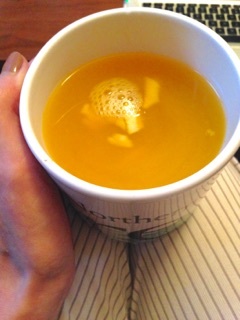
In a series of ‘Winter Wellbeing’ posts, I will share with you the things I’m focusing on for optimum protection. Starting with a cracking tip I’m pushing onto anyone and everyone that will listen. That is to drink a large mug of hot water with lemon, turmeric, ginger and honey at least once a day. Why? Well, here’s the science bit:
Turmeric contains a compound called curcumin. Curcumin increases levels of a protein called CAMP that helps the immune system to fight off bacteria, viruses and fungi the first time they try to attack. How cool is that!?
Lemons have immune-boosting ingredients called pectin & limonene and the main ingredient in Ginger is Zingiber. Combine these together and you get a powerful combo which helps prevent bacterial infections.
Honey is much needed in this drink to add natural sweetness and balance the other ingredients, but it also adds its own goodness by aiding in the production of white blood cells – and we need those to fight infections.
How can you not love the sound of all that natural help!
You will find all sorts of recipes on-line with different ratios of these four ingredients, some even suggest pots and strainers. I’m far too lazy for all that. I mix everything in a mug and pour over boiling water from the kettle, meaning it takes no more time then making a normal cuppa. As for a recipe, it really is all down to taste, I encourage you to come up with your own ratio catered to your own palette. Here’s what I do…
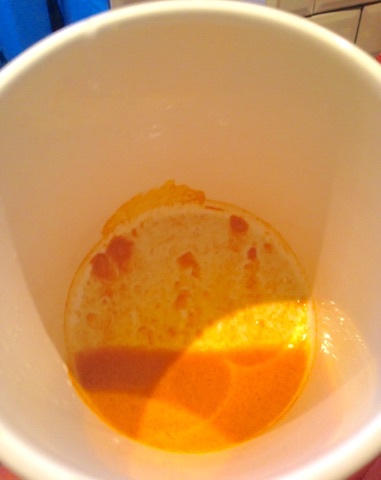
1. Squeeze half a lemon into the biggest mug you can find
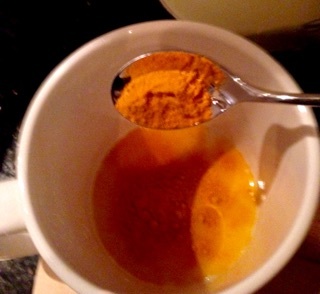
2. Add half a teaspoon of turmeric to the lemon and mix with teaspoon
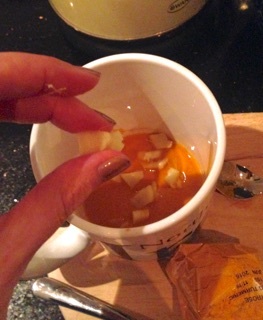
3. Throw in chopped ginger
4. Poor boiling water
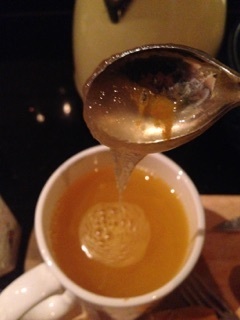
5. Finally add a teaspoon of honey, or to taste
Once you’ve got used to the taste of the turmeric you can add a bit more each time, you know when you’ve put too much when the tonic becomes bitter.
Drink when hot, as the turmeric isn’t so nice once cooled.
On days I’m home for a long period of time, I keep a board with all the ingredients chopped and ready next to the kettle, and keep topping up throughout the day.
I’ve been an avid dry brusher for 18 years. In fact I’m a little evangelical about it, to the point where I nearly bought everyone a dry brush for Christmas a few years ago.
It’s as embedded into my morning routine as brushing my teeth, and only takes a couple of minutes.
You may find the feeling a little weird at first, stick with it, start with a couple of mornings a week and build up from there. I do it every morning, but during the first year of recovery and even now when I’m not well, I try to up it to twice a day – morning and evening, to help my body as much as I can.
If you’ve just finished chemo, your skin may be highly sensitive and this will be too painful for you right now. It’s a brilliant technique for recovery, so I urge you to give it a go – if it is too painful, put your brush aside and pick it up again in a months time. Try it each month until the sensitivity has gone.
So what is the benefit of adding another 5-10 mins to your morning routine?
Dry brushing helps our largest organ – our skin, in its detoxiying process. And since you are carrying all those treatment toxins for a year after you finish, it would be great to give your lovely body an extra helping hand – it has a lot of work to do.
Since we can’t look at our insides on a daily, weekly basis, our skin is the perfect indicator to what’s going on in there. It shows us which organs need help and what they need. After chemo and / or radio therapy, your blood, lymph and cells have all been zapped of goodness, and your organs are under lot of pressure to clean up the show and rejuvenate. Part of this showing on the outside is your skin looking sad & dull and spots all over the place – we’ll talk about what spots mean next week.
Dry brushing helps shed dead skin cells, which not only encourages new cell renewal but it helps smooth and brighten the skin.
As with all types of exfoliation, when you rid the dead skin cells, your skin is better able to absorb moisturisor. You’re probably moisturising all day every day post treatment as your skin is thirsty and dehydrated as hell – dry skin is another sign of the body detoxifying itself.
The brushing motion helps improve vascular blood circulation, lymphatic drainage and release toxins. Yeahi ! We want those poisons out of our body as quickly as possible.
Another thing to get excited about is that it helps strengthen the immune system. It does this by stimulating the lymph vessels to drain toxic mucoid matter into organs of detoxification so we can purify our entire system.
The rough bristles stimulate the nerve endings in our skin, in turn stimulating our nervous system. It’s the sensitivity in our nerve endings post chemo that may make this a little painful at first.
After all those toxins and poisons, I bet your cellulite has hit a depressing new level. Alongside other means, dry brushing also aids reduce the visibility of those toxin dimples. The technique increases the blood flow, which moves the toxins to other detoxifying organs and lessens the appearance of cellulite on the top layer of the skin.
How you do it:
Get naked!
Start on dry skin before bathing – no water, hence ‘dry’ brushing.
Starting at your feet, take your brush and gently work it in gentle circular motions upwards.
After you’ve finished with the ankles, move up to the lower legs, thighs, stomach, back and arms.
On your limbs move the brush in long, smooth, gentle strokes. Starting from the bottom of your feet upwards, and from the hands towards the shoulders, and on the torso in an upward direction help drain the lymph back to your heart.
Please be careful of any post surgery scars, it’s best to avoid this area for about a year until the skin is less raw.
Also, be super light on more sensitive areas where skin is thinner, such as your breasts.
That’s it! Super quick, super easy.
You’re now ready to step into the shower and wash away all those dead skin cells.
Finish this lovely routine with a layer of moisturisor.
Tips:
When I have time, I focus a few more additional minutes to my cellulite and up the pressure on the thighs and buttocks.
There were days during and immediately after treatment where my skin was so sensitive that even water from the shower hurt. This does eventually go and when it does, you can add another little routine to your shower, which alongside the dry brushing invigorates the skin and stimulates blood circulation. Dry brush, wash as normal, then finish your shower by ending it with three hot and cold cycles. By this I mean turning on the water as hot as you can take it for several seconds, then as cold as you can handle it, then hot, then cold for three cycles.
Rinse your brush with warm water at the end of each week and dry it in the sun or on a radiator to avoid it getting mouldy.
Types of brushes:
Always go for a natural bristle bath brush – stay away from anything synthetic.
There tends to be two types:
No HandleLong handle
I always go for the long handle version as it helps me reach my back. It’s also a good idea in early days of recovery where you can’t bend down too much.
My personal favourite is a long handled cactus bath brush from The Body Shop at £10.
Be careful:
If you are recovering from skin cancer, please seek medical advice before trying this.
Do not use the brush on broken skin, rashes, or anything infectious.
For me, Sunday mornings are usually a forced rush out of bed to enjoy as much of Andrew Marr as possible, but this morning I was full of glee to be in front of the TV way ahead of Mr.Marr. Having said that, it wasn’t a hop, skip and a jump getting there. I woke up with moderate fatigue, which meant some mental work to get out of bed, and on to the sofa. Once there, I sat and enjoyed the quiet and stillness of the morning with a mug of hot water and lemon (coffee is a no-no), breathed and had some gentle banter with myself. That gave me a little more energy to make some porridge and watch a few hours of political programming until my body caught up with my brain. At which point, it definitely was a hop skip and a jump into the shower (there was a little jig in there somewhere too). And so my day has turned around with a little patience and kindness.
Five hours later, I am now very much enjoying that Sunday coffee and fulfilling the ambition of the day which was to write. All it meant was I had to rethink how I spent the morning, give my body the time it needed, some boosting food and most importantly gentle words of encouragement.
This may sound like an easy healthy perspective, but it wasn’t easy to get here. Cancer-related fatigue (CRF) really tripped me up after treatment, it’s no exaggeration to go as far as to say it was a disabling. It took over a year and a half to fully get control back and be able to enjoy a new normality. It’s chronic, it’s still there, it’s something I have to manage meticulously every day, and by doing so I’m moving myself further away from it.
Fatigue is one of the biggest and long term side affects across all cancers, one that isn’t fully understood by medical professionals and often under-reported by patients to their specialists. That was definitely true for me, I accepted it was part and package and never really gave it much time in my conversations with the hospital doctors, I felt there were bigger things which needed their attention. As a result, I didn’t have any guidance on it apart from some general advice I found on the web. Without fully understanding how it worked or management techniques, I spiraled to a very dark place, the lowest point in the whole journey.
I was prescribed access to my local Marie Curie centre for physiotherapy, and through that I gained a wonderful team of professionals to start combating this minefield.
Everyone experiences CRF differently, and to different degrees. It’s caused by different factors; some of the cancers increase your body’s need for energy, which weaken your muscles / chemo / radiotherapy / medication / anemia / operations / poor nutrition / lack of exercise / hormone therapy / emotional and mental wellbeing.
I have a hormone-based cancer which grew quietly and meant for three years prior to being diagnosed it was robbing me of a lot of energy, and my organs weren’t able to operate to their full capacity, meaning my body went into treatment already quite fatigued. There were two rounds of chemo, major op and hormone therapy in the space of a year as well as dozens of weird and wonderful drugs, all of which bring fatigue with them.
I learnt enough from the Marie Curie team to start making pivotal changes to combat the fatigue, plus I had amazing daily support from a very special person who ‘got it’. Even so, I was hostage to this condition mentally and physically until March this year – 1 year and 4 months after all medications stopped. In March I started taking probiotics which assisted my gastric system and pancreas to start behaving. Up until this point, I couldn’t keep food in for more then a few days at a time (at best), keeping my body and mind stuck in a state of fatigue and pain. Unable to absorb nutrition properly I was running on reserves constantly, preventing me from putting the building blokes of strength together from the inside out. I finally find myself in the joyous and very blessed position to be able to that. I know how very lucky I am to get here and I don’t take any of it for granted.
So that’s my background with CRF, I’d like to start the conversation about how I manage it. It’s a big subject and will be a common thread throughout my posts, today is just setting the scene really for future conversations.
For those of you who are not recovering from cancer, it’s worth briefly explaining that fatigue and tiredness are two very different things. In this day and age, we can all relate to tiredness from doing too much and / or not sleeping enough. With tiredness you still have a fair bit of energy, your muscles feel weak (especially after work), you might feel forgetful and impatient but all in all these symptoms will pass with a good amount of rest (more rest the older you get).
As well as the mental symptoms, for me it feels like I have been completely zapped of all energy, from my very core. My limbs feel heavy and hollow and my body doesn’t engage with my brain. An example of it at it’s worst is waking up from a a healthy sleep, brain fully engaged yet unable to raise my arm to answer the mobile phone on my bedside table.
In my mind’s eye, I see my energy bar like the one computer characters have at the bottom of the screen (or had, I haven’t played a computer game in over ten years). Like those little characters, if I collect a piece of fruit, my energy goes further into the green and if I get hit by an arrow, it moves it towards the red. When I dip into the red, the fatigue monster raises it’s ugly head.
Through many crashes, I’ve learned my apples from my arrows, the boosters from the zappers, and how to preserve a healthy green bar. It’s not about only collecting the apples and avoiding the arrows, on the contrary it’s about balancing them out, making considered choices, keeping you in control.
Apples – energy boosters:
Wholesome natural food: fruit, veg, seeds, nuts, herbs and spices. Anything eaten in its natural form unmodified.
Additional supplements.
A healthy night sleep: between 6 – 8 hours uninterrupted.
Water, water, water. Because I can’t stress this enough and something I’m still not great at myself.
Rest – you need to find your balance, as too much will become an energy zapper.
Exercise – again, if you do too much of the wrong type at your stage of recovery, it becomes an energy zapper.
Being generally active.
Relaxation and meditation.
Positive people who make you feel lifted after being in the company.
Arrows – energy zappers:
Processed food.
Caffeine.
Sugar.
Bad sleep or lack of.
Work.
Alcohol.
Cigarettes.
Medication.
Healing – inside and out.
General illness, like a cold or tummy bug.
Stress and anxiety.
Too much physical activity.
Negative people.
General socialising.
Too much rest.
I will write a post in November about how I manage the apples and arrows. From now until then, if you’re suffering with CRF, try keeping a little log each day of:
What you eat and drink.
How much water you’ve consumed.
How much sleep you had and quality (something as simple as one – two – three stars), noting anything particularly disruptive.
What you did that day generally, top line, note form.
Fatigue levels / notes.
This may sound tedious but it’s a short term exercise that will pay off in the long run, I promise.
I enjoyed doing it at the end of each day, giving me something to do in bed to unwind instead of watching netflix.
This little log will help you see patterns you may have fallen into unknowingly – so you need to be honest with yourself. It will identify your personal set of apples and arrows, so you can start making changes.
A month may sound like a long time, but it’s not really after everything you’ve been through. I feel a month truly reflects your lifestyle and habits. Ideally, and if you enjoy it, I’d highly recommend keeping the log going after you start making the changes enabling you to monitor the positive impact too. Once you’re in full swing of your energy bar, this log becomes a boring pointless exercise and you’ll be able to put it in the bin.
Most of these energy boosters and zappers need a post of their own, and I will be covering them individually over time.






 Top of the list is my favourite new find, an app shared by Liz Fellas (ta chick!), and it’s become a daily highlight.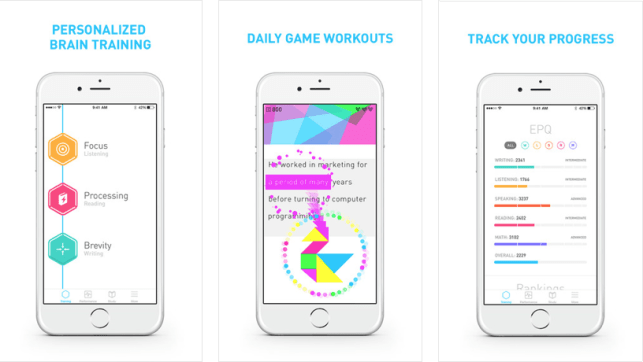
 Try using your opposite hand for simple tasks, like brushing your teeth, washing up, using your phone, opening jars, buttering toast.
 I can quickly become a creature of habit, so I vigorously follow this tip, making sure routine doesn’t creep up and take over.


 You know me, eating had to be in here somewhere. If we’re looking to stimulate the emotional part of our brains, then new foods does so brilliantly, it excites us through sight, smell and taste – that’s a lot of good stimulation.

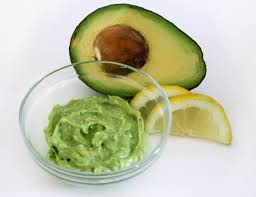 One of my favourite childhood memories was watching with intrigue and amazement as my dear dad washed his hair with weird and wonderful kitchen-found products. There were lemons, olive oil, beer and eggs…not all together, obviously. And the only way I was ever allowed to use face masks as a teenager was to learn recipes to make them myself….queue, an increase of avocados on mum’s shopping list, not an easy all-year-round find back in the early 90’s.
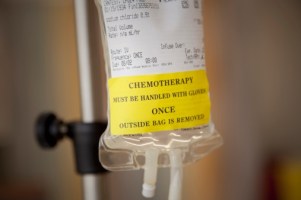 Having chosen the chemotherapy road, I decided to make some lifestyle changes along side it and give it all I had. One of those changes was cleaning up my act and reducing the number of toxins I was putting in my body aside from drugs. Limiting the carcinogenics going into my body, so it could work at its optimum strength to fight the cancer already there. That was my approach, and not something that was medically backed by the doctors. Considering how we were raised, turning to toxin-free products and home-made potions felt like the completely natural thing to do.
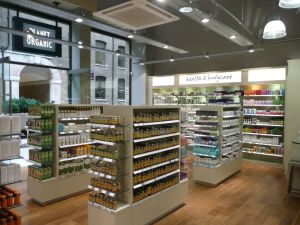 I silently walked around Planet O (I go quiet when I’m really mad), Georgie excitedly showing me the new health store of the naughtiest, whilst I dragged my feet thinking of my empty bathroom cupboard. As we turned the corner into the beauty aisle, my heart skipped a beat. What was this? This wasn’t the health store beauty aisle I remembered. This was a beauty aisle I recognised! Brands and products I already knew and loved, not realising they were clean and green. This was high-end pretty packaging-ville. Oh hurrah! There were no compromises or second rate products here.
 Although I’m now cancer free, and treatment is well and truly finished, I continue to pursue a toxin free lifestyle. Why? Well, I want to stay healthy and keep the cancer at bay for as long as possible, and my part in that starts with how I treat my body. For me, this lifestyle is all about self love. Giving my body the absolute best I can for long-term health and happiness. And on a separate note, but a really important one to raise. Toxins and chemicals feed (CRF) fatigue, a side-effect of cancer therapy, and something I’ve been struggling with.


 This is a face map and an outline of what it means when we experience an outbreak within each zone, especially if re-occurring. I have gone on to give top-line advice on foods and tips to help.
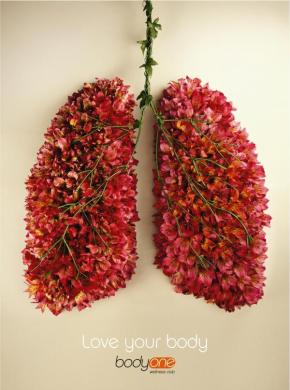
 Tips for zone 7:
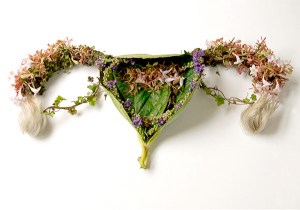 Tips for zones 11 and 13:



 The Cancer Style Guide