 Three cheers to the BBC and Grace Victory for the programme ‘Clean Eating’s Dirty Secrets’ currently available on BBC II!. If you haven’t watched it yet, I urge you to do so. It’s about time someone young and influential started this conversations in public, exposing some of the horrible lies going on in the clean eating industry.
For those of you without access to iPlayer, let me sum up the programme. It’s looking at the booming and very fashionable clean eating movement, which promotes restrictive plant based diets which are meat-free, gluten-free and dairy-free. Gorgeous young folk, with millions of social media followers (and a lot of money in the bank), preaching their way of eating is the best way. BUT and here’s the big BUT, are they qualified to do so? Most of the theories being sold are scientifically inaccurate and based on flimsy extreme thinking. With the matching diets unsustainable and harmful to our health. Yet, the industry is unregulated, and these people are getting away with packaging and selling absolute nonsense . And no one is questioning them, because these diet sellers look gorgeous and have a ‘perfect life’, so they must know what they’re talking about right?! The show reveals that a third of the top UK health bloggers have sought medical advice for eating disorders – I bet that’s not on their Instagram page alongside a photo of a chia pot! Probably not, when there’s a stake of the £2,000,000,000,000* wellness industry going. (*source: global wellness institute)
You may think it’s odd I’m tackling this subject, bearing in mind I often use the hashtag #cleaneating myself. It’s because of that, I feel it important to clear up my position on this subject, specifically in relation to cancer. A lot of us have been sitting back waiting for this backlash to start for some time now; things are getting quite ridiculous out there in certain corners.
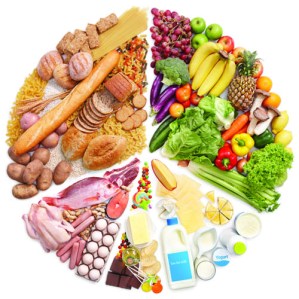 Nutrition and the power of food on our well-being is something I feel extremely passionate about. It’s one of the biggest contributing factors in my recovery after treatment. Where the doctors were wonderful at removing the cancer from my body, it was the dietitians, nutritionists and pharmacists that I worked with afterwards that helped me get my good health back.
I’ve seen first hand what eating well as part of a rounded healthy lifestyle can do for people dealing with illness. It amazes me every day. I spend a good chunk of my time in the health world, building The Cancer Style Guide with qualified and credible professionals in this area. We’re having a great time exploring the constant advancement being made by experts.
Great work is being done in the area of food and health all over the world, but unfortunately, it’s not getting as much mainstream attention as the glorified, self proclaimed ‘experts’ who have built their empires on selling crazy extreme diets and lifestyles on social media – they are tarnishing a good industry with a very ugly brush.
In a world full of convenience food, high sugar products, additives, preservative and chemicals we can’t pronounce, I want to be a champion of the health movement for encouraging us to make changes and offering us alternatives. I want to be part of an industry inspiring everyone (not just recoverers) to make healthy changes to their lifestyle, so they can get decrease their chances of illness.
I’m becoming extremely knowledgeable in this area, but I’m no way qualified. I’ve thought about applying for one of those easily accessible (and passable) qualifications out there, but after watching the industry these past couple of years and the crazy-town it’s become, I’ve decided it’s better to align myself with credible qualified professionals instead (each with over 10 years experience in the health sector), and stick to the stuff I know. Together we can be promote living a healthy balanced life after cancer, without prescribing any sort of extreme diets or make big claims and promises.
When you’re dealing with something as scary illness, you’re vulnerable, often unarmed in knowledge and it’s easy to fall victim to the BS out there. Gawd knows I did, time and time again. This is one of the main reasons I’m doing what I’m doing – my team and I want to build a brand full of amazing people who balance out the nonsense with realistic advice and support to help you become you again in a life after cancer. Not create an off the peg, one size fits all, prescriptive lifestyle.
Some of my experience with diets during cancer….
Like many of you, I’ve been in one of the most desperate situations you can imagine being in in life. When you’re at that place, the inner fighter in you needs to do something. You feel you need to get involved, and have something to control. The doctors are doing their thing, but there’s got to be more right? You panic, and want to come at this from all angles – drugs, food, religion. All bets are off, everything goes. It’s that blind panic and fear that is sending people at their most vulnerable into the arms of the extreme diets.
I believed a handful of crap along the way. I read the books, I went to the workshops, and sat through countless global webinars from the comfort of my bed.
 -Veganism had a brief appeal, but I never found enough convincing evidence to give up a food group I love. I’ve changed how I eat dairy (to be discussed another time) but eggs, milk in my tea, the odd cheese board and gelato are still part of my life. I’ve been judged a fair few times by other survivors for not being vegan.
-I spent my second round of chemo quietly worrying I was poisoning myself to death by not giving up sugar. All because I read lots of ‘expert’ advice which claimed that by continuing to eat sugar, I was feeding the cancer cells.
-Juicing seemed to be shrinking a lot of tumours on the other side of the world. So I bought a juicer. Then I was told by a nutropath in the UK that juicing is really bad for the pancreas and could harm me. So the juicer went back in the box. (For the record, I don’t listen to juicers or nutropath’s any more)
-I attended a workshop by a survivor who nearly (nearly) convinced me I could heal myself by following a raw food diet (raw was the clean fad five of years ago).
-The worst though, was the alkaline diet. I’ll never forget living in absolute fear when I tried to learn this load of bollocks (it makes me cry just writing this). It got to the stage I was too scared to eat a tomato. A tomato! Something that is nothing but wonderfully nourishing and nutritious broke me. Some alkaline diet authors said I could eat tomatoes, others wrote I couldn’t, and one claimed that once you grill it, it went from being alkaline to acidic, thus becoming harmful. It was that moment, straight after a chemo session, feeling wretched, standing in the kitchen covered in post-its (of what I could and couldn’t eat), that I broke over a tomato. Hysterical to the point of passing out,trying to remember if I could or couldn’t eat it grilled or raw. If that little red tomato was going to be a factor in my death or not. How fucked up is that!? I know that sounds extreme, but when you’re fighting for your life, this shit is extreme! Your thinking is extreme. Your fear is extreme.
That tomato incident was my deal breaker. I never went near another fad diet after that, I threw it all away and ate a lot of grilled tomatoes. For the rest and majority of my treatment I ate well and healthy when I could. But here is some information that may shock you; alongside the wholesome healthy food, I also ate gluten, drank dairy and ate fish. I cooked my food (shock! horror!). My mum made a big chocolate cake after each chemo, which I ate without sharing. I smashed countless six packs of prawn cocktail crisps during the midnight steroid munchies. I drank gin martini’s and champagne at any opportunity I felt strong enough, and smoked the odd cigarette. I did all of that, the stress and pressure lifted, I used my energy to keep happy and positive, and got on with the life I had, whilst I still had it.
Steve Jobs on the other hand, who also had advanced NET pancreatic cancer, followed a vegan plant-based diet, totally different to mine, but didn’t make it. There’s no rhyme or reason to cancer, when it comes to who survives, who doesn’t. A harsh and heart breaking reality is, I know vegans who have survived cancer and vegan’s who haven’t. I’ve seen people smoke their way through cancer, I’ve seen people juice their way through cancer. I’ve seen people give up sugar and make it through, and those give it up, eat raw and sadly not.
 The truth is we’re still understanding this huge and complex illness. There are over 200 types of cancer, which all act differently in the body. Different people, from different environments, with different exposures, and different genetics are battling with this disease. People of different ages, ethnicity, genders, body weight and health conditions. No cancer is the same. No treatment is the same. No fight is the same. No recovery is the same. So tell me how can one diet or lifestyle work for all this? It simply can’t.
No one has all the answers. Not the doctors. Not the nutritionists. Not me, or other survivors. And definitely not the health bloggers.
There isn’t an app, book, pill, magic berry or super-food that’s going to give you the promise of a cancer-free-life. And cutting out complete food groups, or following extreme diets isn’t going to do that either I’m afraid.
What we do know for sure though is that following a healthy balanced lifestyle is going to help all of us enormously in our every day life. It’s going to go a long way in keeping our bodies and mind healthy, and live a much better quality of life.
The Cancer Style Guide team belong to the school of thought that reducing the number of carcinogens, and artificial chemicals from your diet and general life, is one small way (amongst a number of other factors), of decreasing your chances of getting sick in the future (from all illness), but it isn’t a guarantee you’re never going to get sick.
It helps us feel better, more energetic, and stronger in the present. Our motto is “if you feel better, you fight better”.
That is our version of clean eating and clean living. It’s not about a prescriptive diet, cutting out anything completely from your life or demonising any particular food groups.
That’s the thing though, there isn’t one version or definition of ‘clean eating‘. In light of what’s going on, we might have to think about whether to continue using this terminology all together. Do we use it under our own definition, or step away from it to disassociate ourselves from the negative diets being sold under the umbrella term? We don’t know yet.
There are no promises. There isn’t a right way or a wrong way. We’re in this cancer mind-field together, trying to muddle through, make sense of it all and do the best for ourselves and each other.
Our in-house nutritional adviser (and qualified dietitian) Clare Gray encourages us “eat consciously”. Fill your meals with as much natural real food as possible. Reduce the amount of processed food, ready meals and takeaway’s. Do this in a way that suits your lifestyle, your palette, and the food available to your part of the world. Unless you have health issues to address, you don’t need to cut out complete food groups. By all means, have a bit of what you fancy, in moderation.
Food is one small part of life, keep it in context, don’t let it consume you or rob you from living a positive, happy and balanced life.
Enjoy food! Enjoy life!
Lulu x
 The Cancer Style Guide